


Featured Content

Supermicro SuperBlades®: Designed to Power Through Distributed AI/ML Training Models
- October 6, 2022
- Author: David Strom
Running heavy AI/ML workloads can be a challenge for any server, but the SuperBlade has extremely fast networking options, upgradability, the ability to run two AMD EPYC™ 7000-series 64-core processors and the Horovod open-source framework for scaling deep-learning training across multiple GPUs.

AMD’s Threadripper: Higher-Performance Computing from a Desktop Processor
- October 5, 2022
- Author: David Strom
The AMD Threadripper™ CPU may be a desktop processor, but desktop computing was never like this. The new chipset comes in a variety of multi-core versions, with a maximum of 64 cores running up to 128 threads, 256MB of L3 cache and 2TB of DDR 8-channel memory. The newest Threadrippers are built with AMD’s latest 7 nanometer dies.

Supermicro and Qumulo Deliver High-Performance File Data Management Solution
- October 3, 2022
- Author: David Strom

Red Hat’s OpenShift Runs More Efficiently with Supermicro’s SuperBlade® Servers
- September 30, 2022
- Author: David Strom
The Supermicro SuperBlade's advantage for the Red Hat OCP environment is that it supports a higher-density infrastructure and lower-latency network configuration, along with benefits from reduced cabling, power and shared cooling features. SuperBlades feature multiple AMD EPYC™ processors using fast DDR4 3200MHz memory modules.

Single-Root I/O Virtualization Delivers a Big Boost for Performance-Intensive Environments
- September 28, 2022
- Author: David Strom

Build an Accelerated Data Center with AMD's Third-Gen EPYC™ CPUs
- September 28, 2022
- Author: David Strom
“AMD EPYC™ processors are now a part of the world’s hyperscale data centers,” said Lisa Su, AMD’s CEO. Meta/Facebook is now building its servers with powerful third-generation AMD EPYC™ CPUs.

Fast Supermicro A+ Servers with Dual AMD EPYC™ CPUs Support Scientific Research in Hungary
- September 22, 2022
- Author: David Strom
The Budapest Institute for Computer Science and Control (known as SZTAKI)

Performance-Intensive Computing Helps Lodestar Computer Vision ‘Index’ Video Data
- September 21, 2022
- Author: David Strom
Lodestar is a complete management suite for developing artificial intelligence-based computer vision models from video data. It can handle the navigation and curation of a native video stream without any preparation. Lodestar annotates and labels video, and using artificial intelligence, creates searchable, structured data.

Gain Business Insights Faster by Building the Right Infrastructure for Performance-Intensive Computing
A white paper from IDC projects a new role for IT leaders in preparing the infrastructure required to properly power performance-intensive computing (PIC) for enterprise workloads, such as data-driven insights, AI/machine learning, big data, modeling and simulation and more. Get the full white paper to learn best practices and avoid pitfalls when implementing performance-intensive computing infrastructure.
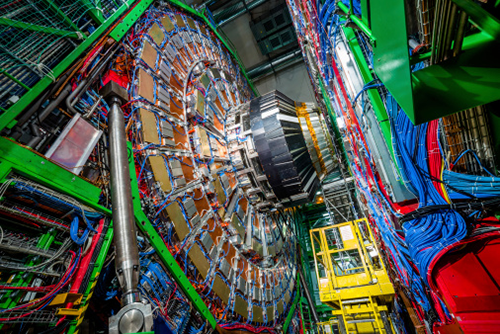
CERN Parses Hadron Collider Data with 900 Supermicro Computers and AMD CPUs
- September 15, 2022
- Author: David Strom
CERN is trying to discover what happened in the nanoseconds following the Big Bang that created all matter. It is manipulating data flows with custom AMD circuitry that slices up the Large Hadron Collider data into smaller pieces. “You need to get all the data pieces together in a single location because only then can you do a meaningful calculation on this stuff,” said Niko Neufeld, a CERN project leader. The effort entails rapid data processing, high-bandwidth access to lots of memory and very speedy I/O among many servers.
- ‹ previous
- 19 of 20
- next ›